
UK Trading Allowance Triples to £3,000
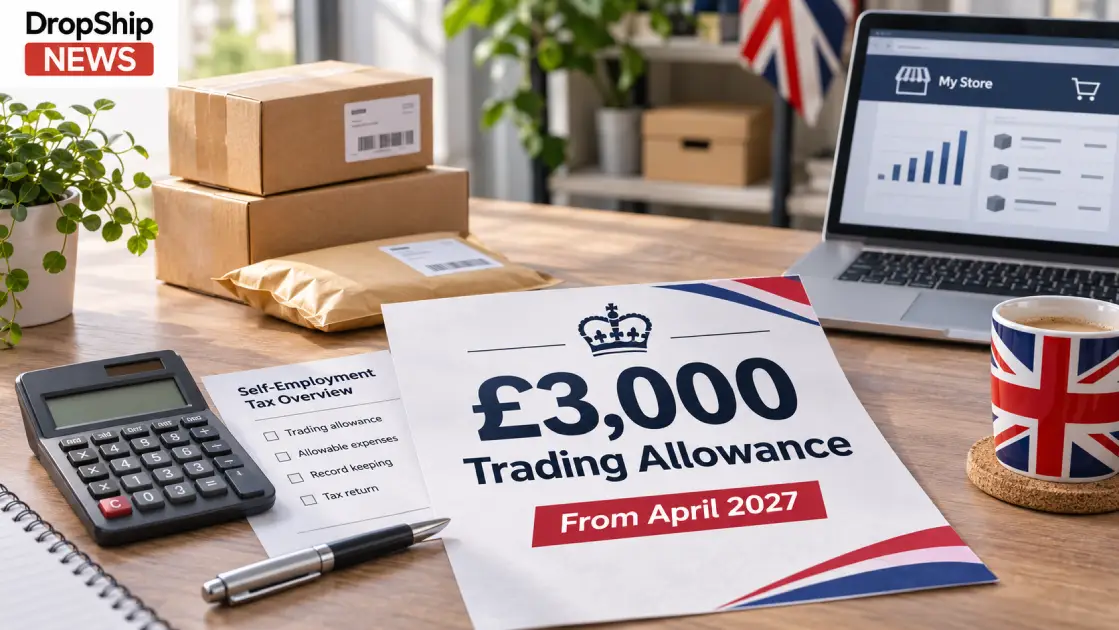
The UK government has confirmed plans to increase the annual tax-free trading allowance from £1,000 to £3,000 from 6 April 2027, offering potential tax savings and less paperwork for people running small businesses, including dropshipping and other ecommerce ventures.
Announced in the Autumn Budget on 28 October 2026, the change will also raise the Self Assessment trading income reporting threshold to £3,000.
However, there’s an important catch for online sellers: the allowance applies to gross trading income, not profit. And for dropshippers with substantial supplier, advertising and fulfilment costs, claiming the allowance won’t always be the most tax-efficient option.
What is changing in April 2027 for dropshippers?
The trading allowance allows qualifying individuals to receive a limited amount of income from trading and certain miscellaneous activities without paying Income Tax on that income.
Under the government’s announced changes:
- The annual allowance increases from £1,000 to £3,000.
- The Self Assessment trading income reporting threshold also increases to £3,000.
- Both changes take effect from 6 April 2027, covering the 2027–28 tax year onwards.
- The existing £1,000 allowance remains in place for the 2026–27 tax year.
The measures will be introduced through the Finance Bill 2026–27, meaning the necessary legislation must still complete the parliamentary process.
According to HMRC’s official tax information and impact note, up to 1.4 million individuals could benefit. Around 400,000 are expected to see an average tax reduction of £380, while approximately 100,000 may no longer need to report their trading income through Self Assessment.
For a new store testing products alongside a day job, that could mean no tax to pay on the first £3,000 of sales. For established stores with higher costs, the picture is quite different.
These are government estimates, not guaranteed savings for individual businesses.
Who qualifies for the £3,000 trading allowance?
The allowance is intended for individuals earning income from trading or qualifying miscellaneous activities. This can include people operating small online shops, selling products through marketplaces or running dropshipping businesses as sole traders.
It is particularly relevant to someone testing an ecommerce business alongside their regular employment.
However, the allowance does not apply to limited companies or income earned through business partnerships. Certain income from connected businesses is also excluded.
Importantly, it is one allowance per individual, not £3,000 for every online store.
If you operate a Shopify store, sell products on eBay and earn additional trading income elsewhere, you generally need to consider those qualifying receipts together.
The change is a UK Income Tax measure for individuals with UK-taxable trading income. International sales may form part of a qualifying UK sole trader’s trading income.
Why gross income matters more than you might think
Here’s where beginner dropshippers need to pay attention.
Imagine you launch a small online store and generate £2,800 in sales during the 2027–28 tax year. Your supplier and other business costs total £2,000, leaving £800 profit.
Provided you qualify, the new trading allowance could cover your entire £2,800 of gross trading income, leaving no taxable profit from that activity.
But suppose your store generates £8,000 in sales and incurs £6,000 in allowable business expenses.
You would have two potential methods of calculating taxable profit:
- Trading allowance method: £8,000 revenue minus £3,000 allowance = £5,000 taxable profit.
- Actual expenses method: £8,000 revenue minus £6,000 allowable expenses = £2,000 taxable profit.
In this example, claiming actual expenses produces a substantially lower taxable profit.
You cannot deduct the £3,000 allowance and your actual business expenses against the same trading income.
The allowance also cannot create a tax loss, so a loss-making store would normally claim actual expenses instead.
For dropshippers, whose margins can be relatively narrow, this distinction is crucial.
What expenses should dropshippers consider?
Unlike businesses providing services with minimal overheads, ecommerce merchants often have significant costs before making a sale.
Depending on the circumstances, allowable business expenses may include:
- Products purchased from dropshipping suppliers.
- Supplier shipping and order fulfilment charges.
- Shopify, WooCommerce-related and other business software costs.
- Marketplace selling fees and payment-processing charges.
- Advertising expenditure on platforms such as Google, Meta and TikTok.
- Other qualifying business expenses.
Not every payment is automatically tax-deductible, and the treatment of particular costs depends on the circumstances and accounting method.
I suggest keeping accurate records of revenue and expenses from the beginning, even if your sales remain below the trading allowance.
Those records will help you assess whether claiming the allowance or deducting actual expenses makes better financial sense.
Does earning under £3,000 mean you won’t need a tax return?
Not necessarily.
The government intends to increase the Self Assessment reporting threshold for qualifying trading income to £3,000 from April 2027. This should reduce administrative requirements for some small traders.
However, individuals may still need to complete a tax return for other reasons, including additional taxable income or existing reporting obligations.
Someone already registered for Self Assessment should not simply stop submitting returns without checking their circumstances and contacting HMRC where appropriate.
The trading allowance also applies for Class 4 National Insurance purposes, but it does not replace separate rules covering VAT or other tax obligations.
For the current 2026–27 tax year, sellers must continue following the existing £1,000 rules.
What should new and existing dropshippers do?
For someone testing a small ecommerce venture, the higher allowance could make getting started financially simpler.
But I wouldn’t recommend treating £3,000 as a target or assuming that staying below it is automatically beneficial.
A business generating £20,000 in revenue with healthy margins may be far more attractive than one generating £2,500 in sales simply to remain within an allowance.
Focus on building a commercially viable operation. Compare product costs, supplier shipping charges, payment fees and advertising expenditure before deciding whether a product is profitable.
Reliable dropshipping suppliers, suitable ecommerce platforms and accurate dropshipping tools all play a part in understanding your real operating costs. A dropshipping profit calculator can help you assess margins before committing to products, advertising or additional order fulfilment services.
The bottom line: Tripling the trading allowance is a useful development for small UK entrepreneurs, particularly those starting with modest sales. But it isn’t a universal £3,000 tax saving, and established dropshippers with substantial expenses may be better off using normal profit calculations.
The sensible approach is to understand both methods, keep proper records and choose the treatment that reflects your actual business finances.
Disclaimer: This article is for general information only and does not constitute tax or financial advice. The changes described are based on the government’s Budget 2026 announcement and remain subject to legislation being passed. Tax treatment depends on individual circumstances, so speak to a qualified accountant or contact HMRC before making decisions about your business.
Sources
HM Revenue & Customs — Increasing the trading allowance, published 28 October 2026: https://www.gov.uk/government/publications/income-tax-increasing-the-trading-allowance/increasing-the-trading-allowance
HM Treasury — Budget 2026:
https://www.gov.uk/government/publications/budget-2026-document/budget-2026-html
HMRC — Tax-free allowances on property and trading income:
https://www.gov.uk/guidance/tax-free-allowances-on-property-and-trading-income
HMRC — Expenses if you’re self-employed:
https://www.gov.uk/expenses-if-youre-self-employed