
Google Product Warranty Update: What Dropshippers Need to Know
Google Merchant Center now supports warranty information for general retail products, giving dropshippers another way to communicate product benefits to potential customers. For sellers whose suppliers provide genuine, transferable warranties, I think this is an opportunity worth exploring, particularly for higher-value products where customers want reassurance before buying.
The change, highlighted on 16 October 2026, expands Google’s warranty attribute beyond its previous use for vehicle advertising in Japan.
Retailers can now submit warranty durations as part of their product information in Google Merchant Center, the platform that manages product data for Google Shopping ads and free listings.
It’s a relatively small update, but one that could be useful for dropshippers selling electronics, appliances, tools and other products where warranties influence buying decisions.
What Is Google’s Warranty Attribute?
The new warranty attribute, identified as [warranty] in Google Merchant Center, allows retailers to provide information about how long a product’s warranty lasts.
For example, a product could have a warranty lasting six months, one year or three years.
Google accepts two pieces of information:
- Duration: The length of the warranty, expressed as a whole number.
- Duration unit: Whether that number represents months or years.
The attribute is generally optional, although specific regulations in certain markets can require warranty information to be supplied.
Google’s documentation explains how warranty information can be submitted for use in Shopping ads and free product listings.
However, Google hasn’t promised that adding a warranty will improve rankings, increase traffic or guarantee that warranty information appears prominently in every listing.
I wouldn’t view this as an SEO trick. It’s simply another opportunity to provide useful product information.
How Do You Add Warranty Information to Merchant Centre?
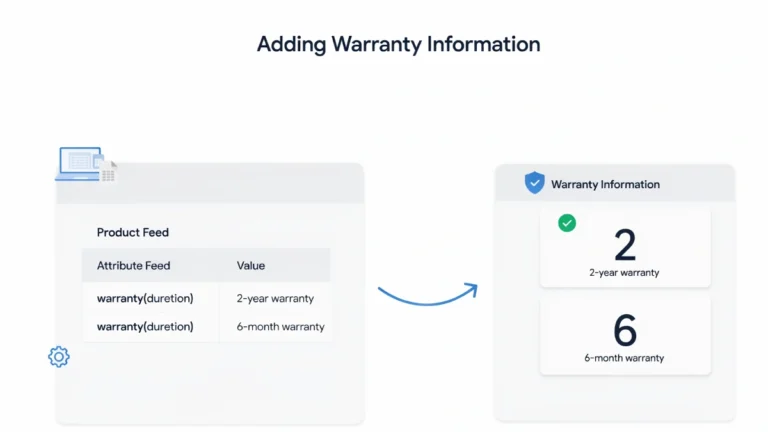
The process is reasonably straightforward if you manage your own Google product feed.
For retailers using a CSV or TSV product feed, Google specifies the following format.
Attribute name:
warranty(duration:duration_unit)
Example value for a two-year warranty:
2:year
For a six-month warranty, the value would be:
6:month
Google also supports warranty information submitted through XML feeds and the Merchant API.
You can find the complete technical instructions in Google’s official warranty attribute documentation.
What About Shopify Stores?
If you’re using Shopify’s Google & YouTube sales channel, your product information is normally synchronised with Google Merchant Center.
However, that doesn’t mean every optional Merchant Center attribute is automatically available for editing in Shopify.
I suggest checking whether your existing product-feed integration supports warranty information before installing anything new.
Depending on your setup, you may be able to add it through a compatible feed-management app or a supplemental data source in Merchant Center.
A supplemental data source can add extra information to products already in your main feed. Google requires its Advanced Data Source Management add-on to access that option.
Once the information has been submitted, check the affected products in Merchant Center to confirm the warranty values have been processed correctly.
And don’t forget to include the warranty details on your actual product pages. Customers need to understand what’s covered, not simply how long the warranty lasts.
Why Warranty Information Could Benefit Dropshippers
One of the biggest challenges facing independent dropshipping stores is customer confidence.
Customers buying from Amazon or a familiar high-street retailer generally know who they’re dealing with.
A relatively unknown Shopify store doesn’t always enjoy that advantage.
If someone is buying an electrical appliance, power tool or expensive fitness product from an unfamiliar retailer, they may reasonably wonder what happens if it stops working.
A genuine warranty can help address that concern.
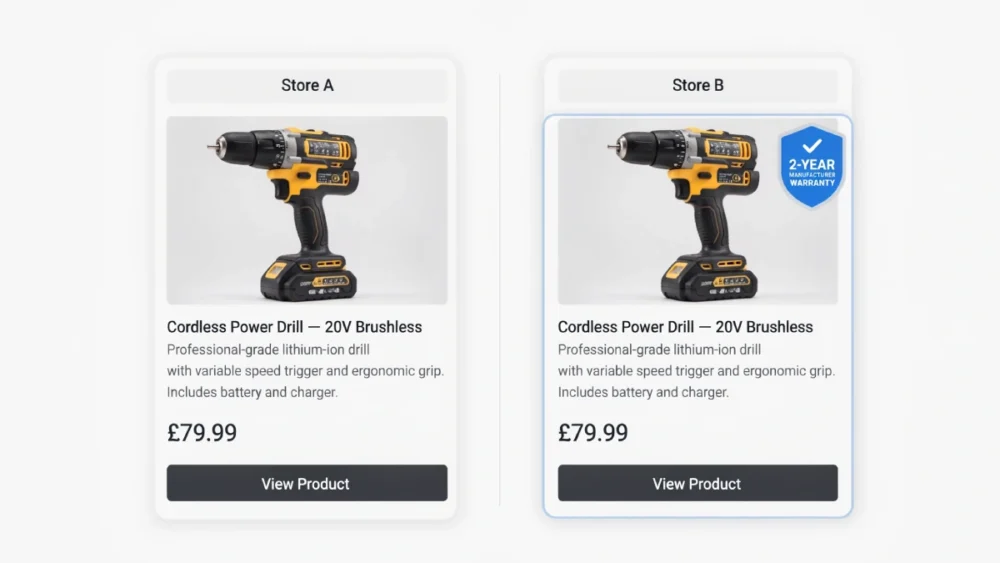
For example, imagine two stores selling similar cordless drills.
One provides little more than a product description and price.
The other clearly explains that the product includes a verified two-year manufacturer’s warranty, who provides the cover and how customers can make a claim.
Assuming the price and other conditions are comparable, I would expect that additional reassurance to make the second offer more attractive to some customers.
It won’t necessarily win the sale, but it removes an uncertainty that might otherwise discourage someone from buying.
You May Already Have a Selling Point You’re Not Using
This is where I think dropshippers should pay particular attention.
Some suppliers and manufacturers already provide warranties with their products.
But their dropshipping suppliers/partners don’t always communicate those benefits clearly.
If your supplier offers a genuine warranty that applies to your customers, I suggest making that information visible on your product pages and including it in your Google product data where appropriate.
It’s a product benefit you may already have without needing to offer an additional discount.
There are three practical advantages worth considering:
- Greater customer confidence: A clearly explained warranty can reassure buyers that support is available if something goes wrong.
- A stronger product offer: Warranty coverage can help distinguish your product from similar listings where no warranty is advertised.
- Fewer unanswered questions: Explaining warranty terms before purchase may reduce uncertainty about faults, repairs and replacements.
These are potential commercial advantages, not performance improvements Google has demonstrated from its new attribute.
Which Dropshipping Products Typically Have Warranties?
Warranties are particularly common among products with electrical, electronic or mechanical components.
Some product categories worth checking with suppliers include:
- Consumer electronics: Headphones, speakers, tablets and cameras.
- Computer equipment: Monitors, keyboards, printers and accessories.
- Household appliances: Coffee machines, vacuum cleaners and air purifiers.
- Power tools: Electric drills, sanders and workshop equipment.
- Garden equipment: Electric lawnmowers, trimmers and pressure washers.
- Fitness equipment: Exercise bikes, treadmills and electronic fitness devices.
- Smart home products: Security cameras, smart doorbells and connected devices.
- Watches: Traditional watches and smartwatches.
- Electrical lighting: Desk lamps and other powered lighting products.
- Furniture: Adjustable desks, office chairs and products with mechanical components.
These are examples of categories where warranty coverage is common, not a guarantee that every product includes one.
Always confirm the actual coverage with your supplier before advertising it.
Don’t Assume Your Supplier’s Warranty Covers Your Customer
This is probably the most important part for dropshippers.
A supplier telling you that a product has a 12-month warranty doesn’t automatically mean your customer receives the same protection.
The supplier’s agreement might cover you as the retailer rather than the end customer.
A manufacturer’s warranty could also be restricted to particular countries, authorised retailers or specific conditions.
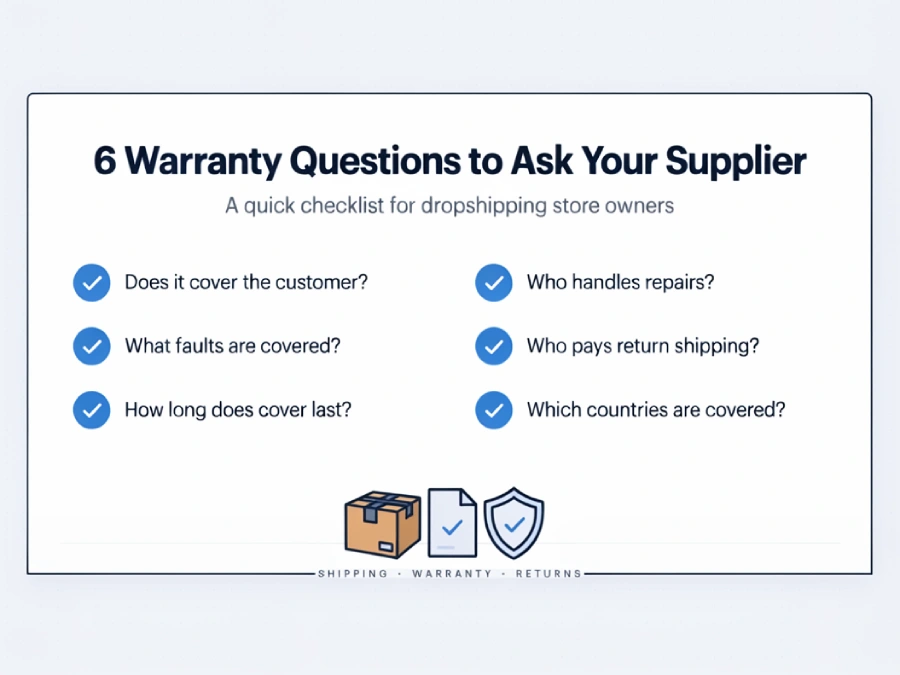
Before advertising a warranty, I recommend asking your supplier:
- Does the warranty apply to the end customer?
- What faults or defects are covered?
- How long does the warranty last?
- Who handles repairs, replacements or refunds?
- Who pays for return shipping?
- Does the warranty apply in the countries where I sell?
I would also request written confirmation of the terms.
For UK retailers, remember that a manufacturer’s or supplier’s warranty is separate from the customer’s statutory rights under the Consumer Rights Act 2015.
Those legal rights remain the retailer’s responsibility where applicable, regardless of whether a supplier offers a warranty.
A 12-month warranty doesn’t mean your responsibility automatically ends after 12 months.
My Advice: Check Your Existing Products First
I wouldn’t recommend rushing out to install another Shopify app simply because Google has introduced a new product attribute.
Instead, I’d start with products you’re already selling.
Identify those that typically come with warranties, particularly higher-value electronics, appliances and equipment.
Contact your suppliers and establish exactly what cover is available.
If a warranty genuinely applies to your customers, make sure the information is clearly explained on the product page.
Then investigate how to submit the duration through your existing Merchant Centre feed.
The biggest potential benefit isn’t necessarily getting Google to display another piece of product information.
It’s giving customers greater confidence in what they’re buying.
And if you’re competing against other stores selling identical products from the same supplier, clearly communicating a genuine warranty is one way to make your offer more attractive without simply cutting your prices.
My recommendation is simple: before spending money trying to attract more customers, make sure you’re communicating the genuine benefits of the products you already sell.
Google’s warranty attribute provides another opportunity to do exactly that.
Sources and Further Reading
- Google Merchant Center — Warranty Attribute Documentation
- Google Merchant Center — Creating Supplemental Product Data Sources
- Shopify — Google & YouTube Sales Channel Requirements
- UK Consumer Rights Act 2015 — Section 30, Goods Under Guarantee
- PPC News Feed — Merchant Center Adds a Warranty Attribute for All Products, 16 October 2026